Squeezing Onto the MRT for an Hour Just to Sit on Zoom is a Massive Trust-Killer
Squeezing onto the MRT just to sit on Zoom is useless presence theater. Earn the commute by dedicating in-office days to highly interactive, screen-free team collaboration.
HR PRACTICES
Daniel Moh
6/5/20263 min read
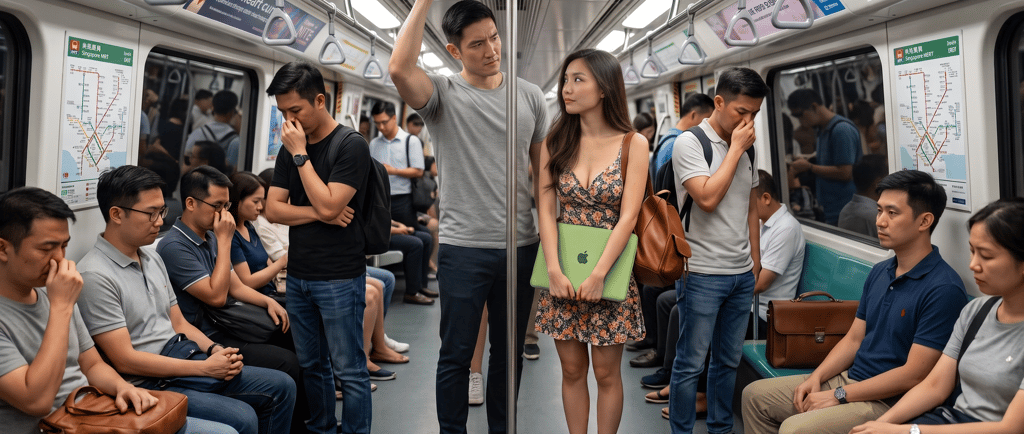

It is 8:30AM on a Tuesday in mid-2026.
You are currently wedged between two strangers on a packed East-West Line train. The aircon is struggling, the humidity is at 90%, and you are actively questioning every single life choice that brought you to this exact moment.
You spend 60 minutes commuting, tap your card at the office gantry, walk to your desk, put on your noise-canceling headphones, and spend the next 8 hours on Zoom calls with colleagues who are sitting literally three rows away from you.
Let’s be honest: if this is what your company's "Return-to-Office" policy looks like, you aren't building a collaborative culture. You are actively burning through your team's trust.
The 2026 Hybrid Gap (The Hard Receipts)
We’ve had over $1.5 years to get used to the formal Tripartite Guidelines on Flexible Work Arrangement Requests (TG-FWAR), which officially took effect on 1 December 2024.
By now, in mid-2026, you would think we’ve figured out how to make hybrid work actually work. But the raw data tells a completely different story.
According to recent 2026 workplace talent studies conducted by major recruitment firms like Reeracoen and Randstad:
Over 60% of the Singapore resident workforce strongly prefer structured hybrid arrangements over full-time office returns.
Companies insisting on rigid, presence-based tracking are experiencing a 35% spike in "RTO friction," directly driving quiet quitting and talent flight among high-performers.
When you force your team back to the office just for "visual presence," you aren't monitoring productivity. You are telling your high-value talent: "I don't trust you to do your job unless I can physically watch your head bend over a keyboard."
And in 2026, top-tier talent doesn't tolerate low-trust environments. They leave.
"Presence Theater" is an Operational Drain
We need to stop treating the office as a physical holding pen for laptop-bound work.
If an employee's daily output consists of solo deep-work, writing code, or analyzing spreadsheets, forcing them to do that exact same work in a noisy open-plan office under freezing aircon isn't an operational strategy. It's presence theater.
This behavior creates a massive cognitive deficit:
The Commute Tax: Your team starts their workday already physically drained, dehydrated, and mentally fatigued from battling the rush hour crowd.
The Constant Distraction: Open offices cut deep-focus productivity by up to 66% due to acoustic and visual interruptions.
The Silent Resentment: When staff realize they traveled an hour just to sit on video calls, they feel insulted.
If you are paying top dollar for human infrastructure, you cannot afford to waste their daily energy on a meaningless commute just to tick a compliance box.
The Floor-Level Fix: Earn the Commute with "Synchronicity Days"
You don’t need to fight the hybrid model, nor do you need to let everyone work from home forever. You need to earn the commute.
If you are going to ask your team to pack onto the MRT and come to the office, make the physical presence count. This requires transitioning from passive attendance to active, structured coordination:
The "Screens-Closed" Block: Designate specific, 3-hour windows on in-office days where laptops and phones are put away. Use this time exclusively for high-velocity, face-to-face strategic brainstorming or team alignment.
Synchronized Social Momentum: If the team is physically together, stop them from eating lunch alone at their desks. Create structured, low-stakes communal moments that build real, organic human connection.
Tactile Team Resets: Replace dry corporate updates with interactive, physical team-bonding challenges. Bring the floor together for screen-free, collaborative problem-solving events that actually make the commute feel worth the effort.
When your office days are engineered around real human interaction rather than passive screen-staring, your team doesn't resent the office—they value it.
Stop running your workplace like a school classroom. Build a high-performance system based on coordination, synchronicity, and trust.
Empowering organizations through comprehensive corporate wellness solutions and holistic employee well-being programs
© 2025. All rights reserved.